
Why Two Amesbury Mill Lofts Can Look Identical and Finance Completely Differently
August 20, 2026
August 20, 2026
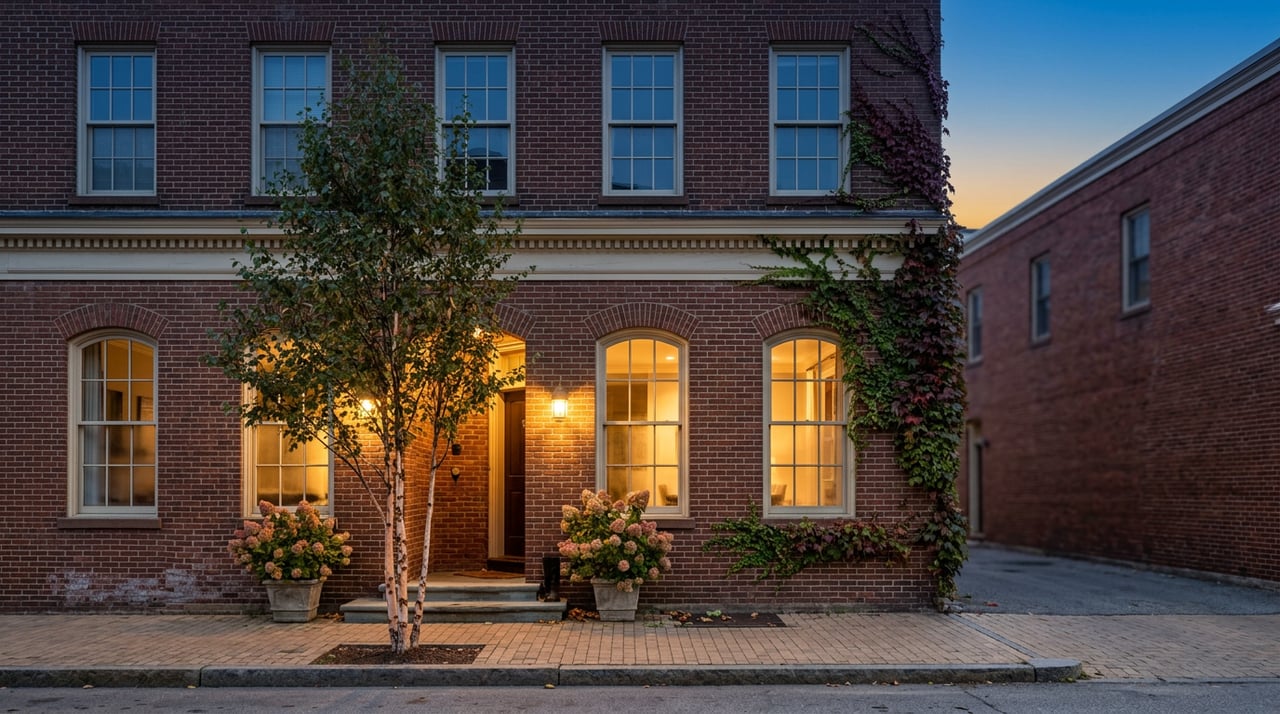
You walk into a unit at Carriage Lofts on a Saturday afternoon. Exposed brick, timber ceiling beams, a wall of arched industrial windows throwing long light across the hardwood. The listing agent mentions the building went up in 1900, came back to life as condos in 2004. It feels finished. Solid. The kind of place where the hard work is already done.
Three weeks later, your loan officer calls with a question you didn't know to ask on the tour: is this condo association warrantable.
That single word decides whether you're getting a standard conventional loan at a normal rate, or whether you're suddenly shopping portfolio lenders and Non-QM products with 20 to 30 percent down and a rate two to four points higher. Nothing about the walkthrough told you which building you were in. That's the part nobody mentions until you're already picturing your furniture against that brick.
A condo is warrantable when the building itself, not just the borrower, meets Fannie Mae and Freddie Mac's standards for financial health and ownership structure. A non-warrantable condo fails one or more of those tests, and it doesn't matter how strong your credit is. The building gets underwritten before you do.
The triggers that matter most for a converted mill:
None of these show up when you walk the unit. They show up on a condo questionnaire, a document your lender sends to the association's management company, and the answers depend on a management company actually returning it promptly. If you've already waived your financing contingency to compete, that's not a great week to be waiting on paperwork.
A garden-style complex built in the 1980s as condos from day one, something like Birchwood Point, was designed around the ownership structure lenders expect. One entity built it, sold every unit to individual owners, and the HOA has been owner-run for decades. A sampled fee there runs $332 a month, and the building has no ambiguity about use: it's residential, full stop.
A converted mill is a different animal. These were built as factories, then sat vacant or half-used for decades, then got repositioned building by building, sometimes floor by floor. Amesbury's Lower Millyard is still described by the city itself as a district transitioning from industrial to mixed use, which means individual buildings can carry ground-floor retail, small manufacturers, or commercial tenants right alongside residential units. That's part of what gives these buildings their character. It's also exactly the kind of mixed-use ratio that can push a building over the 35 percent commercial threshold and into non-warrantable territory.
Not every mill conversion in town works this way. The Lofts at Clark's Pond, at 15 and 25 Cedar Street, converted a 1900-era building into residential units back in 2006, with the same exposed brick and timber beam character but a straightforward residential use. Hatter's Point, a 55-plus waterfront community at 60 Merrimac Street, converted an 88-unit mill building with 16-foot ceilings and 30-foot river-view balconies, and its age and unit count give it a longer track record for a lender to evaluate. Age and a stable, fully-turned-over HOA generally work in a buyer's favor. A newer or smaller conversion, or one still sorting out its commercial tenant mix, is the one that deserves a harder look before you write an offer.
It's also worth remembering that not every mill building in Amesbury is condo-owned at all. Briggs Mill, a 44-unit conversion by Chinburg Properties, operates as investor-owned rental apartments rather than individually financed units. That's a useful reminder that "converted mill" describes a building type, not a single ownership model, and the model is exactly what your lender cares about.
| Building | Address | Converted | Units | Use mix |
|---|---|---|---|---|
| Carriage Lofts | 25 Pond St / Millyard | 1900, converted 2004 | 49 | Residential condo |
| The Lofts at Clark's Pond | 15 & 25 Cedar St | 1900, converted 2006 | Multi-unit | Residential condo |
| Hatter's Point | 60 Merrimac St | Converted mill, 55+ community | 88 | Residential condo |
| Birchwood Point | Amesbury | Garden-style, built as condos | Multi-unit | Residential condo |
| Briggs Mill | Amesbury | Converted 2014 | 44 | Investor-owned rental |
Recent condo sales in Amesbury show how wide the range runs even within this single housing type. A two-bedroom unit on Clarks Road sold for $263,000 in early August 2026. A one-bedroom on Winter Street sold for $247,000 in late July 2026. A unit on Maplewood Avenue closed at $425,000 the same month. Price alone won't tell you which of these sit in a warrantable building and which don't. Only the questionnaire will.
Before you fall further for the brick, ask your agent or the listing side for three documents:
The condo questionnaire, or confirmation that the association has one on file and is willing to complete it promptly. This is the single fastest way to know whether you're headed for conventional financing or a specialty lender.
The HOA's most recent budget and reserve study. A mill building with 16-foot ceilings and century-old masonry has different capital needs than a 1980s garden complex, and lenders want to see the association is funding for it. Sampled fees across Amesbury's condo and townhome stock commonly run from around $180 to $450-plus a month depending on age, amenities, and what's included, so ask specifically what that number covers before you compare it to another building's fee.
The current owner-occupancy and delinquency figures. If a third or more of owners are renting rather than living there, or a meaningful share are behind on dues, that's worth knowing before you're under contract, not after.
If the building comes back non-warrantable, you're not without options. Portfolio loans held by the lender's own balance sheet, and Non-QM loans that weigh your assets and income more than the building's agency eligibility, both remain available. Expect a larger down payment, often 20 to 30 percent, and a rate that runs higher than a standard conventional loan. It's a workable path, but it's a different budget conversation than the one you had in your head walking out of that showing.
Does a non-warrantable classification mean I shouldn't buy the unit? Not automatically. It means the financing path changes, not necessarily the wisdom of the purchase. Buyers with strong credit and a larger down payment can still close, often through a portfolio or Non-QM loan.
Can I find out before I fall in love with a specific unit? Yes. Ask your agent to request the condo questionnaire status as soon as you're seriously considering a building, ideally before your first offer, not after you're under contract with a tight financing deadline.
Are Amesbury's older mill conversions automatically riskier than newer ones? Not necessarily. Age can actually help, since a longer track record of owner-occupancy and dues payment gives lenders more to evaluate. The risk tends to concentrate in buildings still working out their commercial tenant mix or ownership turnover, regardless of how old the structure is.
If a building isn't warrantable now, could that change before I'm ready to sell? It can. If the HOA resolves a litigation matter, brings delinquencies down, or the developer finishes turning over control, a building can become warrantable later, which matters for your own resale pool of buyers down the road.
Buying into one of Amesbury's converted mills means buying into character you can't get from new construction, but the financing path depends on details a showing will never surface. If you're weighing a unit in the Millyard or anywhere else on the North Shore, Jamie Frontiero can help you get the right questions in front of the association before you're locked into a deadline. Let's Connect.
This article is general information, not legal, tax or financial advice. Consult a qualified professional about your situation.
Stay up to date on the latest real estate trends.
Jamie offers a concierge line of Real Estate services for Buyers & Sellers throughout the MA North Shore & NH Seacoast. With a personal approach, she combines local market knowledge and contract expertise to ensure a smooth and successful transaction.
JAMIE FRONTIERO
(603) 205-4705
[email protected]
12 Federal Street
Newburyport, MA 01950